How to Start a Business With No Money in 2026 — What Nobody Actually Tells You
Sangeetha Shaji , Founder of ZIZA Build
4/14/20264 min read
You've read the articles. You've tried learning from YouTube videos. And you're still stuck. Here's why — and what actually works.
If you've searched "how to start a business with no money," you already know what comes up. Dropshipping. Print on demand. Affiliate marketing. Start a blog. Sell digital products. The same fifteen ideas, reshuffled into a new list, published by someone who may or may not have actually done any of it.
You read through the whole thing, feel a brief flicker of possibility — and then close the tab feeling more overwhelmed than before.
That's not your fault. The advice isn't wrong exactly. It's just not built for you. It's built for search engines.
So let me tell you what I actually understood from my eight years of building businesses — product businesses, service businesses, SaaS, e-commerce — none of which started with outside funding, and all of which started with what I already had.
The real reason you are stuck
Here's something most won't say: aspiring entrepreneurs usually think that they can't start because they don't have money — but when we actually sit down and talk, they start to realise money was not the main issue. It was the problem of clarity.
Idea Clash: They are not sure about the type of business they wanna pursue. They are doubting if their business idea is good enough, and will it work. They don't know what their first step should be. And because they can't see a clear path forward, the mind fills with that uncertainty-feeling, and thus the mind when trying to find an obstacle, thinks that it is — money.
But that makes you feel “helpless”, like you are stuck and can’t do anything about it. That is why it becomes crucial for you to change your angle of thoughts.
Your real starting capital: skills and knowledge
Every job you've held, every problem you've personally solved, every industry you've worked in — these are not just experiences. They are assets. And unlike savings, nobody can take them away from you.
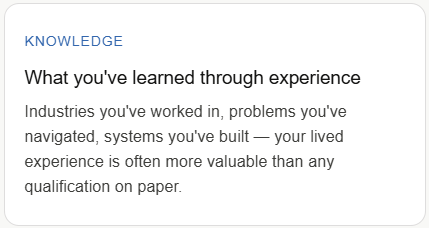
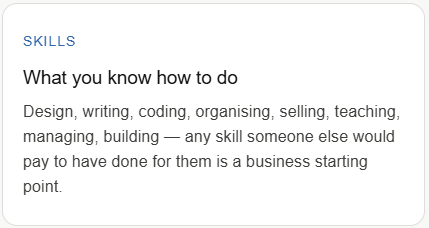
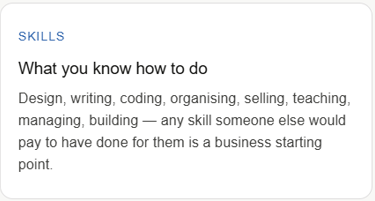
When I started my first business, I had no investment. I build my knowledge and skills through online courses and mentors. It enabled me to start, and to move forward towards my dream business goals. That is the only thing that matters, especially at the beginning phase.
Cutting through the noise — what's real advice and what isn't
Let me be direct about the advice that sounds helpful but often isn't — at least not for someone just starting out.
Real vs. noise
Noise
"Start a dropshipping store."
Possible — but it heavily relies on paid ads, and requires significant time learning platforms, and supplier relationships before you see a return. Not a zero-effort zero-investment path.
Noise
"Start a blog and monetise it."
Takes 12–18 months minimum to build traffic. A fine long-term play — a terrible answer to "how do I start now."
Noise
"Sell digital products on Etsy."
Works — but only if you already have an audience or a very specific niche skill. Without either, you're invisible.
Real
Offer a service based on a skill you already have. You can start this week. No ads, no audience, no inventory. Just your skill, one person who needs it, and a yes.
Real
Use your industry knowledge to consult or coach. If you've spent years in a field, there are people earlier in that journey who want to pay for learning from your experience.
Real
Solve a problem you've personally experienced. You already understand the customer — because you were the customer. That's a head start most founders spend years trying to earn.
So what do you actually do? A real starting framework
Here's what I walk through with every aspiring entrepreneur I work with. No lengthy business plan. No complicated strategy. Just four honest steps.
Where to begin — for real
1.
Write down every skill and area of knowledge you have. Don't filter. Don't judge. Just list everything — professional, personal, self-taught. You will surprise yourself.
2.
Ask: who needs this most right now? Think about the kind of person or business that would genuinely benefit from what you can offer. That's your first audience.
3.
Make one clear, simple offer. Not a brand. Not a website. Not a logo. Just: "I help [person] do [thing] so they can get [result]." Say it out loud. If it sounds clear, it is.
4.
Find the first person to say yes. Tell people in your network. Post on LinkedIn. Send emails. Pitch directly. One yes is all you need to go from aspiring to actually doing.
This is the starting point. Not the whole business plan — just the beginning of it. From here, you learn, you adjust, you grow. Phase by phase, with real information from the real world instead of assumptions from a planning doc.
One last thing before you close this tab
The overwhelm you're feeling right now — from all the conflicting advice, all the different paths, all the people who seem to have it figured out — is real. And it is one of the biggest reasons people never start.
You don't need more information. You need someone to help you cut through it and find the one clear step that's right for your specific situation, your specific skills, and your specific dream.
That's exactly what I do. And I'd love to do it with you.
Click here to book a 1:1 call with me.
Get in touch to launch your business.
Follow us on
support@zizabuild.com
© 2026 ZIZA Build. All rights reserved |
An initiative by Olegora Designs LLP